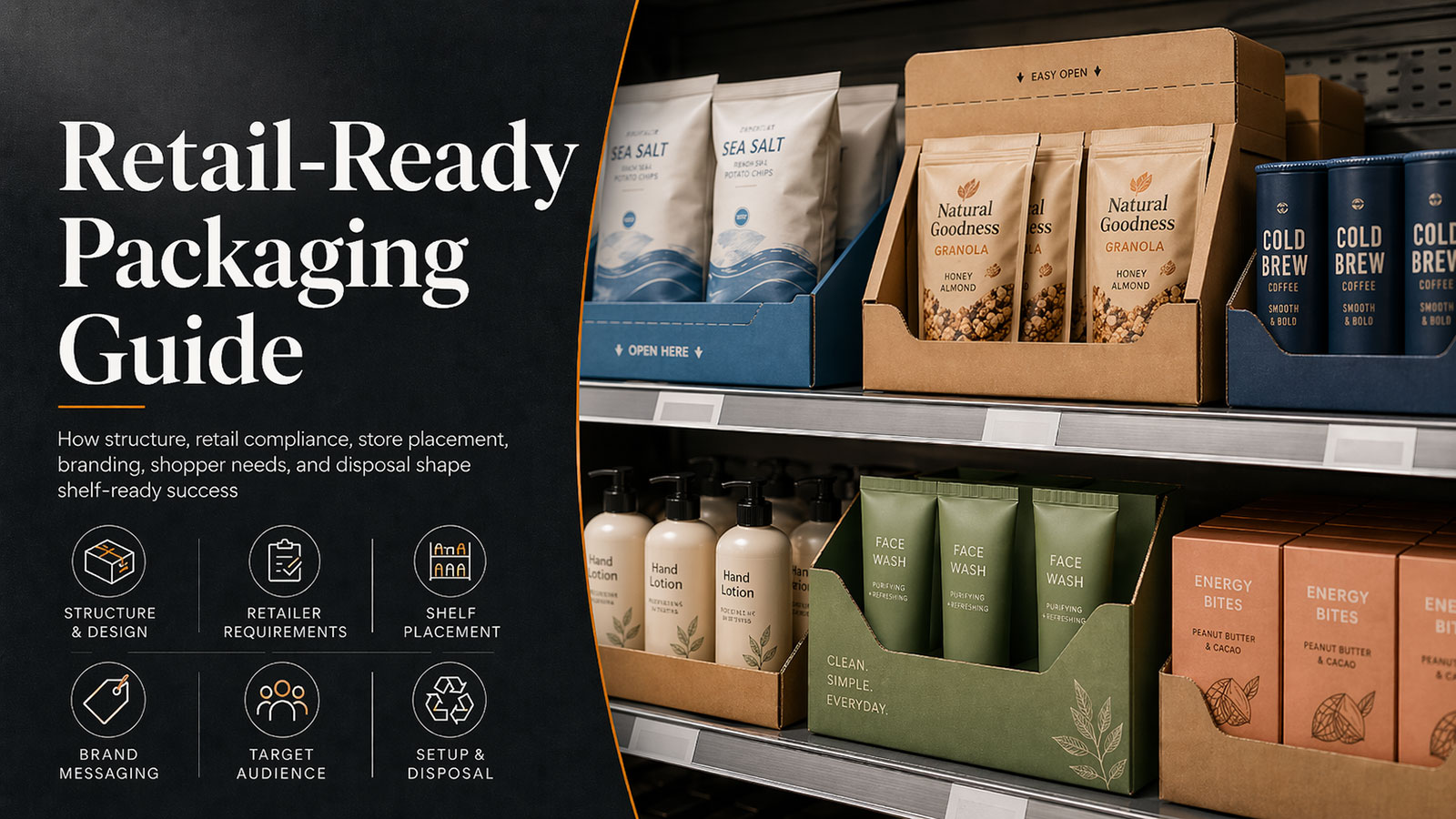
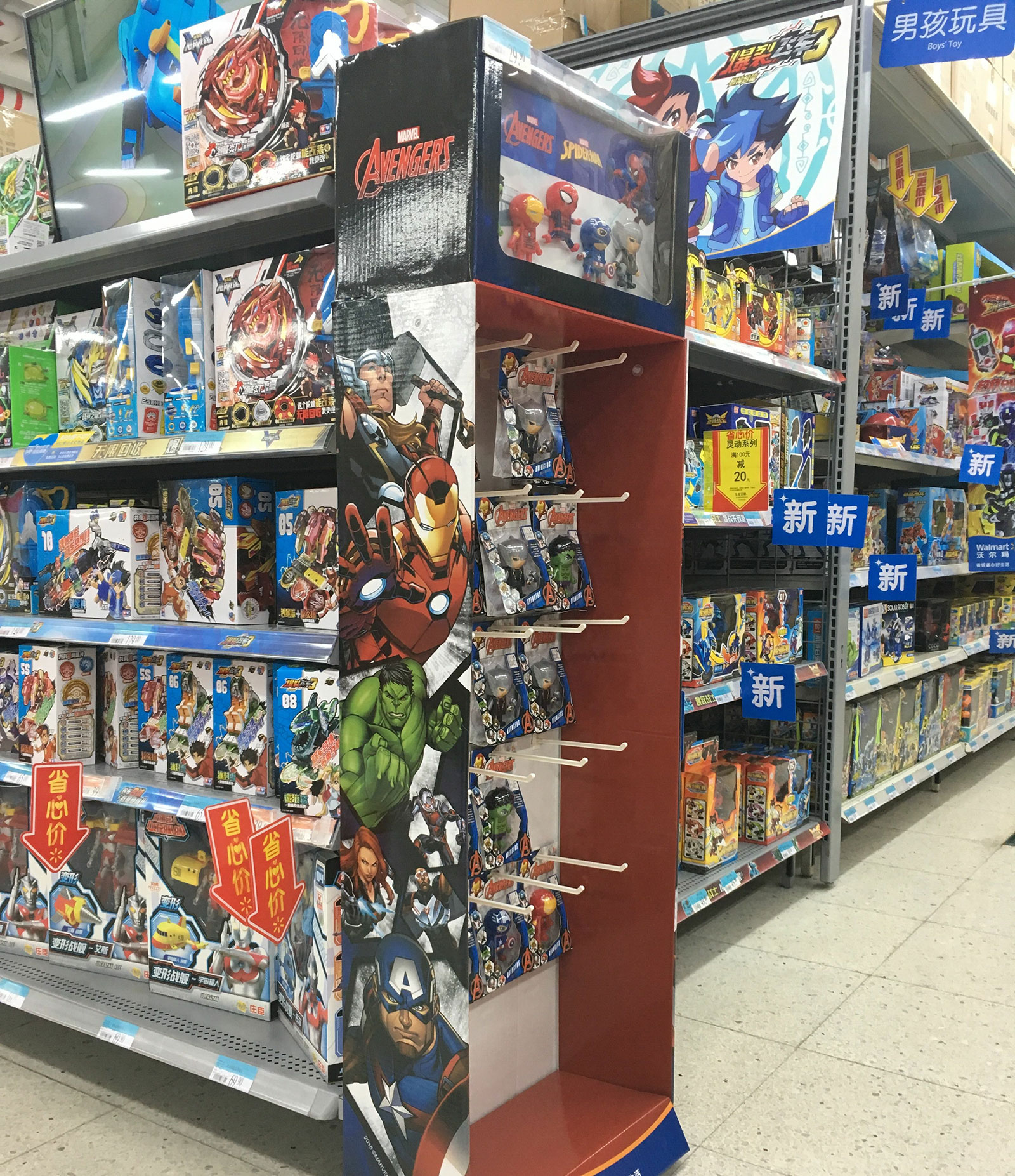
When it comes to winning shelf space and driving impulse purchases inside the world's largest retailer, few tools are as powerful — or as underestimated — as a well-designed cardboard display. Walmart serves millions of shoppers every single day across thousands of stores in the U.S. and globally. For brands and suppliers, getting your product noticed in that environment isn't just a marketing goal; it's a business necessity.
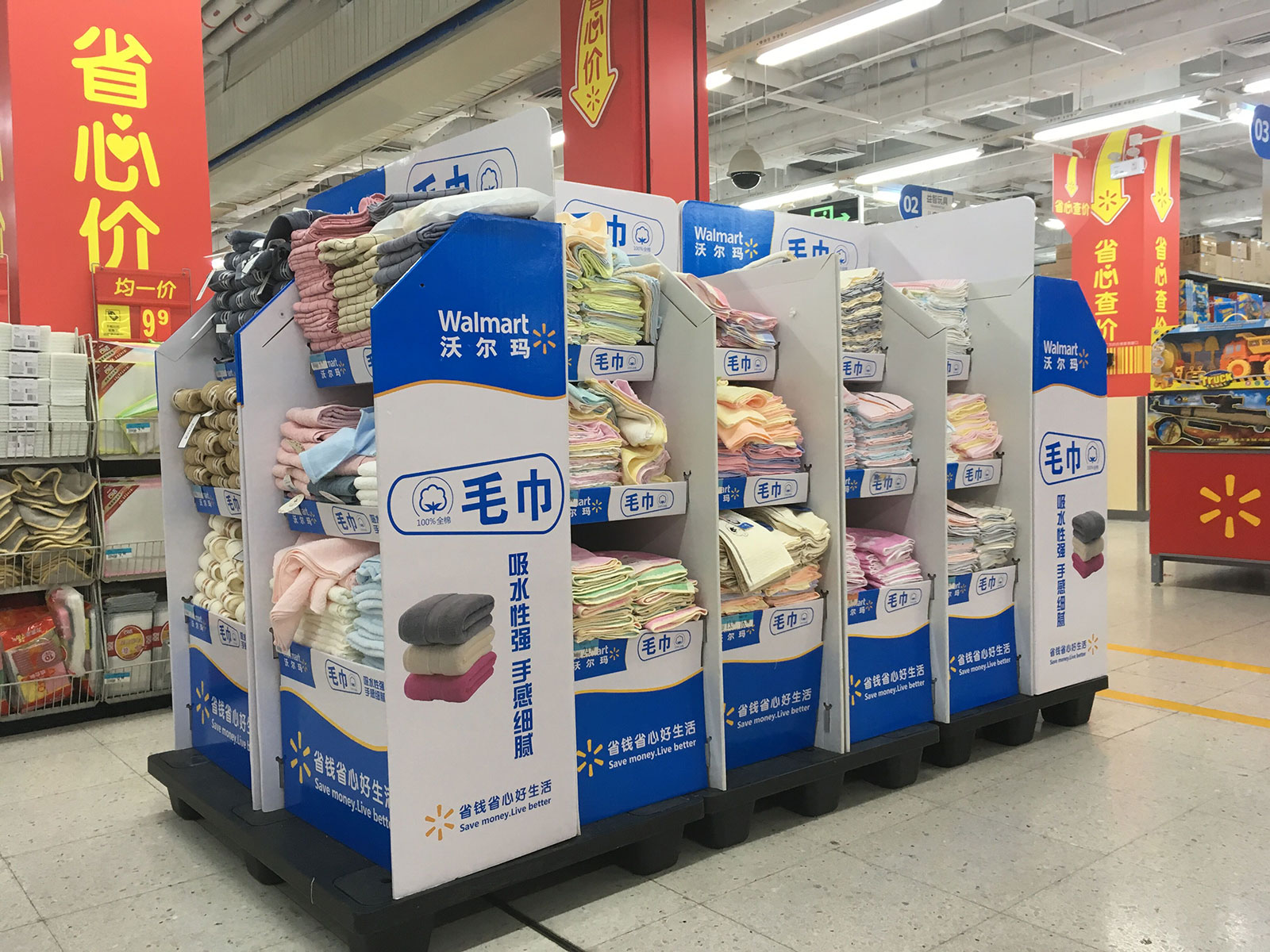
This guide covers everything you need to know about Walmart retail cardboard displays — from display types and Walmart's strict packaging requirements, to design principles and how to choose the right manufacturing partner.
- Why Cardboard Displays Give You an Edge at Walmart
- Walmart's Packaging and Display Requirements
- Types of Walmart Cardboard Displays
- 1. Corrugated Retail Pallet Display
- 2. Full Pallet Display
- 3. Power Wing / Sidekick Display
- 4. PDQ Display
- 5. End Cap Display
- 6. Stacked Tray / Stepped Display
- 7. Countertop / Checkout Lane Display
- Design Best Practices for Walmart Cardboard Displays
- Lead with Bold, High-Contrast Graphics
- Make the Price Value Obvious
- Tap Into Seasonal and Thematic Campaigns
- Build for Sustainability
- Engineer for the Real World
- Test Before You Commit to Production
- Choosing the Right Display Manufacturer
- Ready to Put Your Brand on the Walmart Floor
Why Cardboard Displays Give You an Edge at Walmart
Walmart's retail floor is one of the most competitive spaces in the world. Hundreds of brands compete for the same shopper attention, often within inches of each other. A standard shelf position can easily get overlooked — but a custom-printed, freestanding cardboard display commands attention the moment a shopper turns the corner.
Corrugated cardboard displays offer several advantages that make them especially effective in a high-volume retail environment like Walmart:
-
Cost-effective production — significantly cheaper to produce and ship compared to permanent metal or acrylic displays
-
Fast turnaround — can be designed, approved, and manufactured far more quickly than permanent store fixtures
-
Lightweight and easy to assemble — store staff can set up most displays in minutes, reducing labor time
-
Fully customizable — every surface carries your brand colors, messaging, and product graphics
-
Eco-friendly — cardboard is recyclable, biodegradable, and often made from recycled or FSC-certified materials, aligning with Walmart's own sustainability commitments
For seasonal campaigns, new product launches, or promotional pushes, cardboard displays remain the go-to merchandising solution for Walmart suppliers worldwide.
Walmart's Packaging and Display Requirements
Before designing any display for Walmart, suppliers must thoroughly understand Walmart's compliance standards. Walmart enforces strict guidelines through its Secondary Packaging Retail-Ready Packaging (RRP) Standards — a document that outlines exactly what is and isn't acceptable on the retail floor.
Key requirements include:
-
Retail-ready packaging — displays must be easy to stock, identify, and shop, with clear and unambiguous product labeling
-
Single-item pricing — each individual product unit must carry a scannable barcode
-
The two-pack rule — in certain categories, removing one unit must not cause adjacent units to fall or become inaccessible
-
Standardized heights and footprints — floor displays must conform to approved dimension guidelines so they don't block store traffic or conflict with neighboring fixtures
-
Structural integrity — the display must hold its full product load without collapsing, even after repeated restocking
-
Approved materials — corrugated board must meet specified flute grades and weight-bearing ratings
Failing to meet any of these requirements can result in your display being rejected before it ever reaches the store floor. Working with a manufacturer that has direct experience navigating Walmart's approval process isn't optional — it's essential.
Types of Walmart Cardboard Displays
There is no one-size-fits-all approach to Walmart retail displays. The right format depends on your product type, campaign goals, intended store location, and budget. Here are the most common and effective types:
1. Corrugated Retail Pallet Display
The pallet display is one of the most versatile formats available. Designed to sit directly on the store floor, it allows shoppers to access product from all four sides — creating a true 360° shopping experience. These are frequently placed in Walmart's high-traffic "Action Alley" areas, which run along the main perimeter and center aisles of the store.
Best for: Seasonal promotions, bulk products, new product launches
Key benefits: High product capacity, easy to assemble, full brand coverage on all four sides
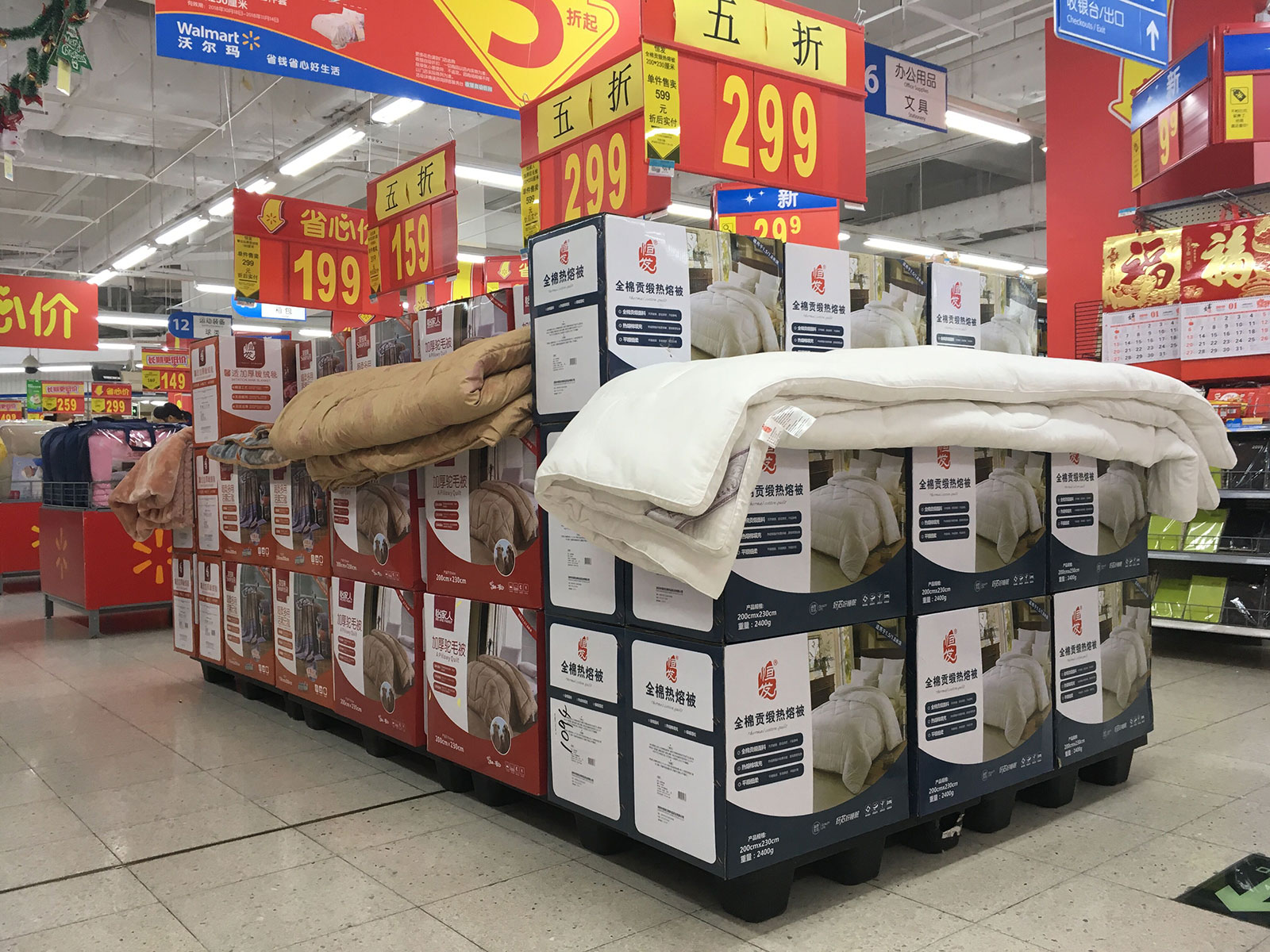
2. Full Pallet Display
The full pallet display occupies an entire pallet footprint and makes the biggest visual statement on the floor. It's the format of choice for brands that want maximum presence during a major launch or high-season promotion.
A well-known example: Wrigley's used a full pallet display with a bold "fun house mirror" creative concept for a product launch inside Walmart — and the campaign exceeded its initial sales targets. The display turned a standard product into a genuine conversation piece in-aisle.
Best for: Major product launches, high-velocity items, category-dominant brands
Key benefits: Maximum brand visibility, large product volume, supports complex graphic storytelling
3. Power Wing / Sidekick Display
Power wings — also called sidekick displays — attach to the end of standard shelving units or clip onto gondola uprights in the middle of an aisle. Because they occupy high-traffic locations without requiring dedicated floor space, they are particularly effective for impulse-purchase products.
Best for: Small products, snacks, accessories, personal care items
Key benefits: Low production cost, premium traffic placement, no floor space requirement
4. PDQ Display
PDQ stands for "Pretty Darn Quick" — and the name says it all. Products are pre-packed inside the display shipper at the warehouse, so the entire unit drops straight onto the shelf or floor without individual stocking. This saves store labor and ensures the product is always presented consistently, regardless of which associate handles the restock.
PDQ displays come in several configurations:
-
¼ pallet PDQ — compact, ideal for regional campaigns or product trials
-
½ pallet PDQ — the most common format, balancing visibility with floor footprint
-
Full pallet PDQ — maximum volume for high-velocity, fast-moving products
Best for: Fast-moving consumer goods, promotional bundles, seasonal items
Key benefits: Labor-saving for store staff, consistent product presentation, minimal packaging waste
5. End Cap Display
End caps sit at the end of every aisle and receive some of the heaviest foot traffic in the entire store. A dedicated cardboard end cap display lets your brand own that position with custom graphics that run from floor to ceiling.
Best for: Category leaders, high-margin products, promotional campaigns
Key benefits: Exceptional shopper exposure, premium store positioning, strong brand narrative
6. Stacked Tray / Stepped Display
Stacked tray displays use a tiered, stepped configuration to organize multiple product SKUs in a clean, cascading format. Each tray acts as an individual shelf level, allowing shoppers to clearly see and reach every product without digging.
Best for: Multi-SKU product lines, beauty, snacks, hardware
Key benefits: Organized presentation, maximizes vertical space, easy to restock
7. Countertop / Checkout Lane Display
Checkout lane displays target one of the highest-converting moments in any retail journey — the moment a shopper is standing still, waiting to pay. These compact units sit directly on or beside checkout counters, and Walmart typically requires them to conform to a 12" × 12" footprint guideline.
Best for: Small impulse items — gum, batteries, lip balm, travel accessories
Key benefits: Very high conversion rate, low unit cost, minimal space required
Design Best Practices for Walmart Cardboard Displays
Meeting Walmart's compliance standards is the baseline. Actually winning on the store floor takes display design that is both structurally sound and visually sharp. These are the principles that separate average displays from ones that move product.
Lead with Bold, High-Contrast Graphics
Walmart shoppers move fast. Your display has roughly three seconds to catch someone's eye as they walk past. Use high-contrast color combinations, large product imagery, and clean, legible fonts. One strong headline message outperforms five competing ones every time.
Make the Price Value Obvious
Walmart's core shopper is value-driven. If your product is on promotion, put that price callout front and center — large numbers, burst graphics, and placement at eye level. Don't bury the deal in small text at the bottom of the panel.
Tap Into Seasonal and Thematic Campaigns
Walmart dedicates significant floor space to seasonal moments — back-to-school, Halloween, holiday gifting, summer, and more. A display designed around a seasonal theme increases your chances of gaining placement approval during these high-traffic windows, when buyer attention and floor resets naturally align.
Build for Sustainability
Walmart has made meaningful public commitments to sustainability. Displays using FSC-certified corrugated board, soy-based inks, and designs that avoid non-recyclable adhesives or coatings are more likely to align with Walmart's internal preferences — and they resonate positively with increasingly eco-conscious shoppers.
Engineer for the Real World
A display that collapses after the first restock creates problems for store staff and damages your brand relationship with Walmart buyers. The structural engineering must account for full product weight, repeated access by store associates, and the physical wear of a busy retail floor — not just a clean showroom prototype.
Test Before You Commit to Production
Before placing a full production order, build a physical prototype and stress-test it under realistic conditions — fully loaded, assembled by someone unfamiliar with it, and with product removed and restocked multiple times. Catching a structural or graphic issue at this stage costs a fraction of what it costs after Walmart has already approved your spec sheet.
Choosing the Right Display Manufacturer
Designing a Walmart-compliant cardboard display is not a job for a general packaging supplier with no Walmart history. The requirements are specific, regularly updated, and strictly enforced. The wrong partner means compliance rejections, store returns, and a strained buyer relationship.
When evaluating a manufacturing partner, look for:
-
Documented Walmart compliance history — ask to see examples of displays that have been successfully deployed inside Walmart stores, not just produced
-
In-house structural engineering — your manufacturer should design, build, and certify the structural integrity of your display before a single production unit is made
-
High-quality printing capabilities — lithographic or flexographic printing at brand-quality resolution is non-negotiable for retail graphics
-
Sustainable material certifications — FSC chain-of-custody certification demonstrates that sourcing claims are verified, not just stated
-
End-to-end project management — from concept and compliance submission through fulfillment and delivery, one point of contact prevents costly miscommunications
A manufacturer with deep Walmart experience understands not just the technical specs, but the approval workflow, lead times, and buyer dynamics that determine whether a display program lands on the store floor — or gets rejected on a loading dock.
Ready to Put Your Brand on the Walmart Floor
A well-executed cardboard display is one of the smartest investments a brand can make inside Walmart. It turns passive shelf space into an active selling environment, communicates your value proposition in seconds, and puts your product directly in the path of millions of shoppers every week.
The brands that consistently win at Walmart aren't necessarily the ones with the biggest budgets — they're the ones that understand the rules, respect the shopper, and show up with a display built to perform from day one. Get the spec right, design with intent, and work with a partner who has been through the process before. The results speak for themselves.