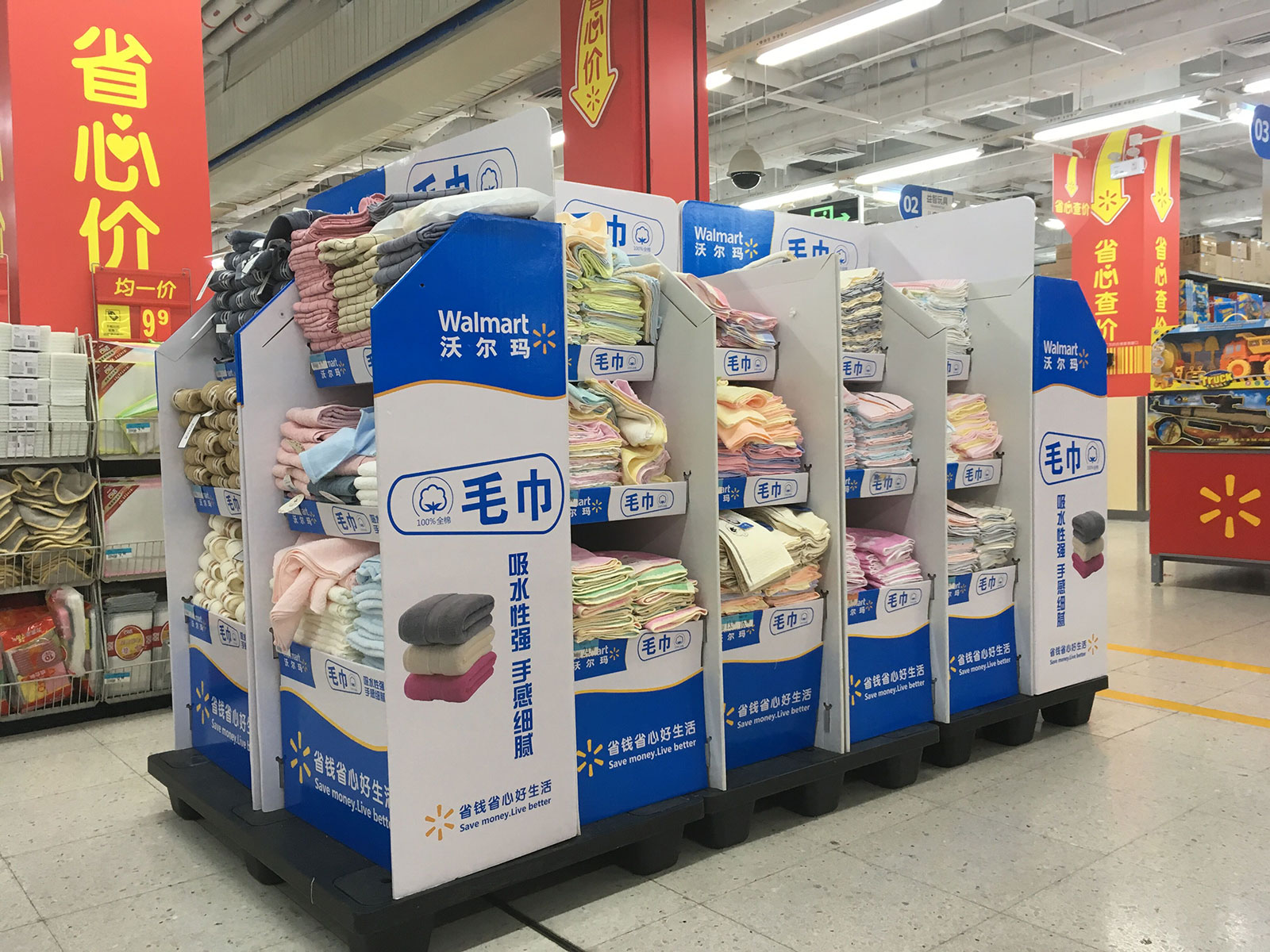
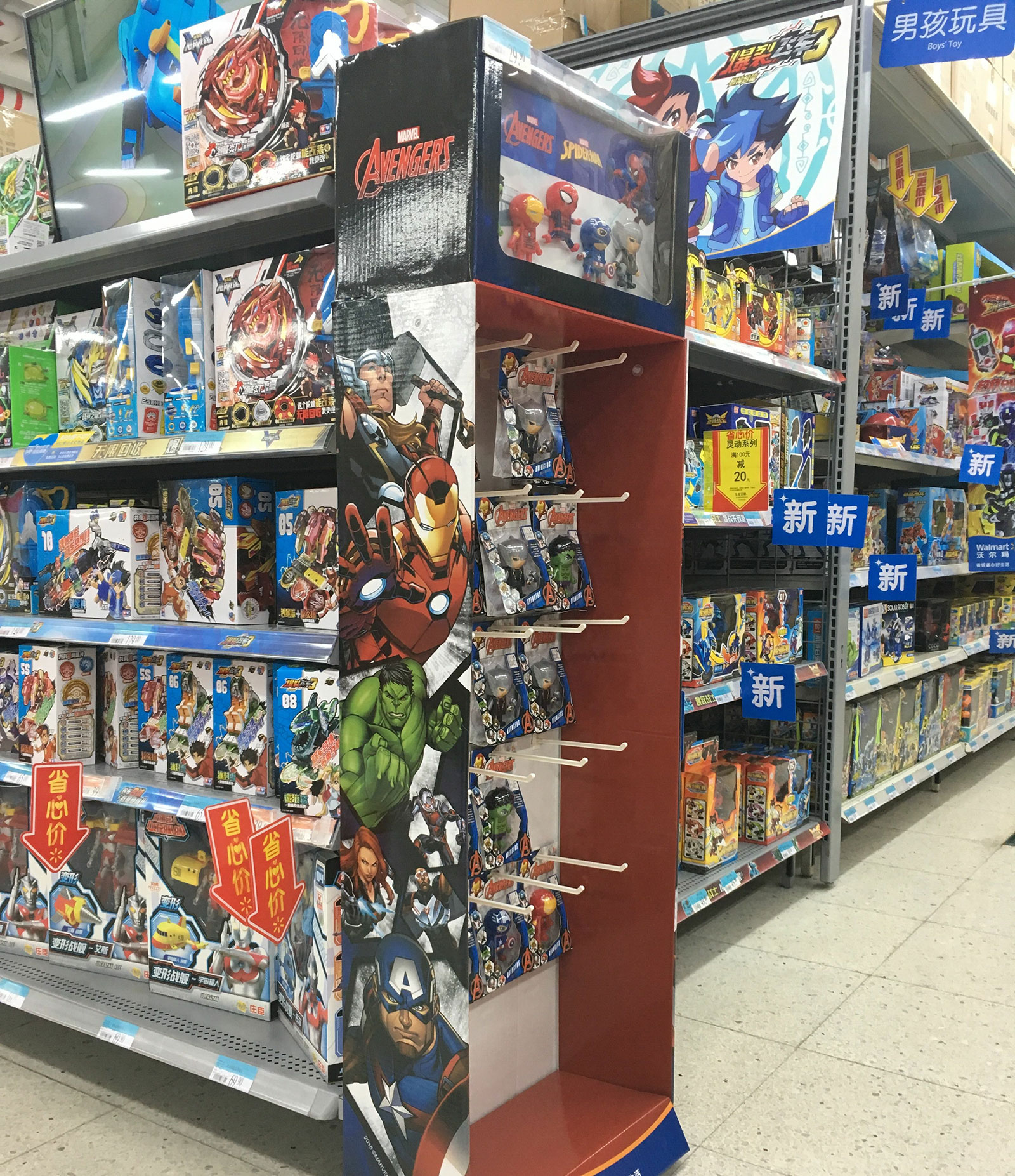
Walk into any major retail store and you'll notice something most shoppers never think about: the products that sell best aren't just better — they're better presented. The packaging does the heavy lifting before a single word is read.
- What Is Retail-Ready Packaging?
- Why Packaging Design Still Drives Purchase Decisions
- 1. The Design Structure
- 2. Meeting Retail Requirements
- 3. Product Dimensions and Store Placement
- 4. Brand Messaging
- 5. Addressing Your Target Audience's Needs
- 6. Setup, Breakdown, and Disposal
- Getting RRP Right the First Time
Retail-ready packaging (RRP) is how brands take control of that moment. But getting it right takes more than printing a nice logo on a box. Here's what actually goes into packaging that works both in the supply chain and on the shelf.
What Is Retail-Ready Packaging?
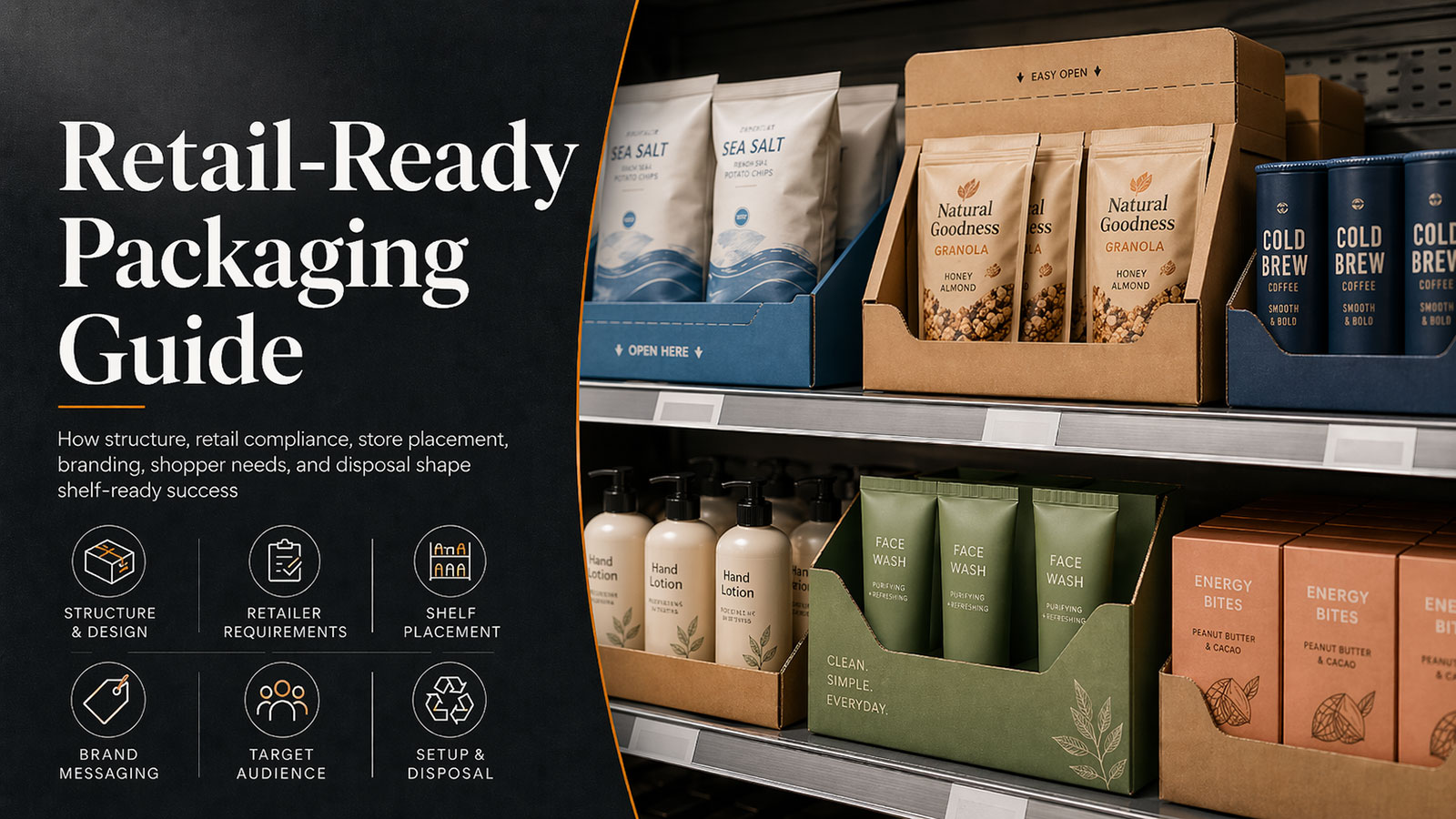
Retail-ready packaging is exactly what it sounds like — packaging that ships from the supplier and goes straight onto the shelf without any repacking, relabeling, or extra handling at the store level.
It's a practical concept with a real business impact. Retailers save time during restocking. Brands get a consistent, controlled presentation at the point of sale. And shoppers see a cleaner, more professional display.
The retail industry often evaluates RRP against five core criteria: it should be easy to identify, easy to open, easy to replenish, easy to shop, and easy to dispose of. Meet all five, and you've got packaging that works for everyone in the chain — supplier, retailer, and consumer.
Why Packaging Design Still Drives Purchase Decisions
Roughly 72% of consumers say packaging design influences what they buy. That number has held steady across years of consumer research, and it makes sense — in a crowded aisle, packaging is the first (and sometimes only) pitch a brand gets to make.
RRP raises the stakes because it's not just consumer-facing. It has to satisfy a retailer's logistics requirements before it ever reaches the shelf. That dual responsibility is what makes RRP design genuinely challenging — and what separates brands that get it right from those that don't.
1. The Design Structure
Everything starts with structure. Before colors, fonts, or copy, the packaging needs to be engineered around the physical reality of the product — its dimensions, weight, fragility, and how many units need to be grouped together.
Structure determines whether a shelf tray needs interior dividers, how the outer shell opens, and whether the packaging can support the product's weight during transit without crushing. A corrugated shelf tray for bottled sauces looks and behaves very differently from one designed for blister-packed hardware accessories.
Get the structure wrong and no amount of great branding will save you. Products shift, collapse, or arrive damaged — and that's a retailer relationship problem before it's ever a consumer problem.
2. Meeting Retail Requirements
Major retailers don't accept whatever packaging suppliers choose to ship. They have documented inbound logistics standards covering pallet dimensions, RFID tag placement, barcode formats, and shipping container specifications. Walmart, Target, Costco — each has its own rulebook, and compliance isn't optional.
Beyond logistics specs, there's a practical requirement that often gets overlooked: retail staff should be able to open and set up the display without any tools. That means clean perforations, clearly marked tear lines, and packaging that opens predictably every time. A display that requires a box cutter or two people to assemble creates friction at the store level — and that friction can quietly get your product moved off the prime shelf.
If your packaging is being designed for a specific retailer, request their vendor packaging guide early in the process. It will shape structural decisions from day one.
3. Product Dimensions and Store Placement
Not all RRP is the same. A floor-standing display unit, a shelf tray, and an endcap shipper all serve different purposes and sit in different locations within the store. Choosing the right format starts with knowing where the product will actually live.
Shelf trays are the most common RRP format — typically corrugated or paperboard, designed to hold multiple units, with a perforated lid that tears away to reveal the product. They slot directly into existing shelf space and work well for mid-sized consumer goods.
Heavier products may require double-wall corrugated construction. Smaller, high-volume products often work better in counter-top displays closer to the checkout. The point is that placement drives format, and format drives structural and material choices. Decide on placement early.
4. Brand Messaging
Packaging is shelf advertising. The moment a product sits on a retail shelf, the packaging is doing the same job a billboard does — but from 18 inches away, competing with dozens of other products in the same category.
That means brand messaging on RRP needs to work fast. High-contrast graphics, a legible logo, and a single clear value statement are more effective than cluttered design. Shoppers don't read packaging — they scan it. If the core message isn't visible within two seconds, it's effectively invisible.
One commonly missed detail: print on multiple sides. During restocking, staff handle boxes from every angle. If branding only appears on the front panel, every other surface is a missed opportunity to reinforce recognition.
5. Addressing Your Target Audience's Needs
A packaging decision that works for a premium skincare brand won't work for a value-priced household cleaning product — and vice versa. The packaging needs to speak the language of the buyer, not just reflect the preferences of the brand team.
Ask a few direct questions: What does your target customer notice first on a shelf? What signals quality to them — minimalist design, bold color, sustainability cues, or clear functionality? Are they buying for themselves or as a gift? Are they in a rush, or browsing?
These questions aren't abstract. The answers directly inform material selection, finish choices (matte vs. gloss, recycled vs. virgin board), copy tone, and visual hierarchy. Packaging that ignores the end consumer and only satisfies the retailer checklist will perform below its potential.
6. Setup, Breakdown, and Disposal
One of the practical advantages of well-designed RRP is that the shipping unit is the display unit. There's no secondary packaging to remove and discard, no assembly instructions to follow, and no waste generated at the store level. The box arrives and goes straight to the shelf.
That efficiency only works if the packaging is durable enough to survive the full logistics journey — warehouse storage, transit vibration, handling at the distribution center — without arriving deformed or damaged. Lightweight construction has to be balanced against structural integrity.
On the disposal side, sustainability requirements from major retailers are tightening. Single-material packaging — fully corrugated, for example — is increasingly preferred because it simplifies recycling and reduces landfill waste. For brands positioning themselves on environmental responsibility, this is also a marketing asset, not just a compliance checkbox.
Getting RRP Right the First Time
Retail-ready packaging sits at the intersection of logistics, branding, and consumer psychology. Each of the six elements above affects the others — structural decisions influence branding opportunities; retailer requirements constrain material choices; audience expectations shape everything from copy tone to finishing.
The brands that consistently execute strong RRP treat it as a strategic asset, not a box-ticking exercise. They involve structural engineers, brand teams, and retail compliance specialists early — before a prototype is ever built — and they test against real shelf conditions before committing to a production run.